
Medical Censorship Part Two: The Danger of Silencing Speech Critical of Specialist Protocols, the Case of Cardiology
Updated: Sep 6
“The greater the ignorance, the greater the dogmatism.”
-William Osler
The primary stated justification by the local cardiology group for seeking to censor me was that since I do not blindly adhere to American College of Cardiology (ACC) guidelines I am potentially putting patients at risks. The doctors who sought my censor cited several studies I included in my newsletter that they found particularly onerous. They stated that if patients followed the advice found in the studies—which, incidentally, was not advice at all, but vetted data published in medical journals—they could be harmed since the advice was blatantly false. Their specific accusations, and the Board of Physicians response, can be found in my first blog on censorship.
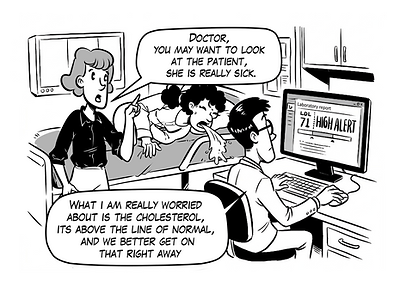
Several areas they highlighted correspond to their adherence to protocolized care that equates disease to defined numerical norms and that advocates drastic “fixing” of numerical abnormalities, something they cite as being codified in the ACC protocol liturgy. These include:
The ACC guideline to push everyone’s systolic blood pressure below 120, regardless of age and coexisting health issues.
The ACC guideline to push everyone’s LDL cholesterol below 70, using statins and then any lipid lowering drugs available to assure LDL is below that firm threshold. Again, this is regardless of age and of other medical conditions.
The ACC presumption that high cholesterol, especially LDL cholesterol, is inherently dangerous and that lowering it is crucial. The ACC also suggests that avoiding high-fat foods is a strategy that can be used in juxtaposition with medicines.
The ACC guideline to monitor for a heart rhythm called atrial fibrillation (afib) and then insist on placing patients with any amount of afib (who fail a certain unverified test called a CHAD score, which all of my patients invariably fail since age drives failure) on either anticoagulants such as Eliquis or Warfarin, or if they cannot tolerate these or choose not to use them, have a Watchman device inserted into their heart.
The importance of stress tests, stents, and other cardiac tests and procedures to assure patient health and safety, something not specifically in the ACC playbook but something these particular cardiologists utilize frequently and deem to be standard of care.
Often ACC protocols are incorporated into medical “calculators” that spit out the risk incurred by a patient who does not aggressively remediate the specified measured abnormality. Such calculators are very precise both in terms of the risk induced by a measurable value that falls outside the range of normal defined by protocols, and the benefit achieved by treating the patient to normalize the number. For instance, they may tell a patient that his/her risk of a heart attack in 10 years is 22.7% (based on measurements such as age, cholesterol level, BMI, blood pressure) unless he/she takes statins and other medicines in sufficient quantity to lower LDL below 70, in which case the risk drops to 7.2%. Or that in someone with atrial fibrillation their annual risk of stroke without blood thinners is 11.2%, which drops to 0.5% on blood thinners. The precision of these calculators obfuscates the patient-centered complexity and nuance of the diagnosis. Calculators are programmed with hand-picked and often methodologically weak studies, typically ones chosen by specialist groups such as the ACC or pharmaceutical entities, and those few studies generate an algorithm that spits out an unambiguous risk/benefit score based on limited and often irrelevant clinical information.
Calculators and protocols can never be sufficiently accurate to assess risk/benefit of the patient sitting in front of the doctor. All studies must be customized to our patients, something we call the art of medicine. Calculators by design magnify the prevalence and perilousness of numerical diseases, while amplifying benefit and minimizing risk of treatment. That is because they include very few and limited studies chosen by the designer of the protocol, often a specialty society or drug-company-financed group. No calculator, even in the best hands, can provide clinically valid risk/benefit analysis for a particular patient, and many of them are so skewed as to give us information that is frankly harmful. As the great physician William Osler tells us: “The good physician treats the disease; the great physician treats the patient who has the disease,” and that “It is much more important to know what sort of a patient has a disease than what sort of a disease a patient has.” In other words, we must treat the complex and messy patient rather than utilize a fabricated numerical disease surrogate that we measure and remediate outside the boundaries of the whole person. Sadly, with protocolized, calculator-codified numerical medicine, the patient is rendered invisible, while the conjured disease and its treatment take center stage.
It is useful to look at my own censorship case through the lens of ACC protocols and cardiology calculators. If the cardiologists are correct, that I am a danger to my profession because I provide a counter-narrative to their calculator-derived truths, then there should be no robust studies to support my position; all studies should neatly line up to buttress the calculator’s verdict and they should be applicable to every patient we treat. We could go further and say that our experience as doctors in the real world should support what the calculator spits out, for as Osler always tells us “Let not your concepts of the manifestations of disease come from words heard in the lecture room or read from the book. See, and then reason and compare and control. But see first. No two eyes see the same thing. No two mirrors give forth the same reflection. Let your word be your slave and not your master.” But I will stray from the crucial role of clinical acumen and stick to the data alone, even though my 35 years of experience in geriatrics should carry some weight and is often oppositional to what the cardiac calculators tell us.
In fact, if the cardiologists had solid data to refute the studies I provide my patients, then rather than seek to censor me, why wouldn’t they produce a solid data-based argument to refute my contentions? This they did not do; they merely stated that what I wrote constituted misinformation and that the Board should deal with me. Thus, in this blog, we will dissect the “unassailable truths” of ACC protocols that my accusers have deemed me to have violated and which they insinuate provides a singular datapoint through which to treat all patients. Much of what I write here is buttressed by an attached PDF paper below whose 92 references highlight the danger of relying on calculators and protocols:
Briefly, what I will show, in defiance of the censorship case made against me, is that:
Dropping blood pressure below 120 is often dangerous, leading to higher rates of falls, kidney disease, fatigue, mental decline, and possibly death in some people. There is no good evidence linking aggressive blood pressure control to longer lives and less illness, especially in the elderly.
Cholesterol is necessary and potentially beneficial to people, especially as they age. Pushing it too low could have detrimental consequences in higher age groups that have not been well studied. Eating cholesterol and high fat foods is not a trigger for heart disease, often just the opposite in fact.
Statins can have some benefits in certain groups of people, but those benefits are small and they diminish with age. Those benefits also have nothing to do with a person’s cholesterol; a high-risk person benefits from statins whether they have high or low cholesterol; a low-risk patient does not benefit from statins whether they have high or low cholesterol. Calculators cannot ascertain that risk; only good clinician acumen can. Statins also have real side effects that increase with age, especially as doses increase.
There is no good evidence that pushing LDL cholesterol below 70 (as ACC/AHA guidelines and their calculators insist) is beneficial. Typically, a doctor’s determination to drive cholesterol below that artificially constructed line leads to overuse of medicines and underemphasis on lifestyle changes. When doctors are number focused with their calculator scores and protocol-guided cholesterol norms, they maximize statin doses (which can lead to serious side effects, especially muscle weakness and falls) and then add non-statin medicines (such as Ezetimibe also called Zetia or PCSK9 inhibitors like Repatha) to push cholesterol even lower, medicines that are either ineffective in lowering death and heart disease or even detrimental, despite their ability to diminish LDL cholesterol. Cholesterol-focused doctors don’t assess or treat a human being, because their myopic gaze is purely numerical with their eyes on a calculator and not the patient.
In atrial fibrillation the use of blood thinners and the newer Watchman procedure has minimal impact on lowering strokes caused by clots if we only consider strokes you actually notice. Most cardiology calculators look at “all strokes,” most of which are dots on a CT scan you’ll never know occurred. Almost as many people on blood thinners get symptomatic strokes caused by clots as people not on blood thinners. In addition, blood thinners can increase the risk of symptomatic bleeding strokes, especially in frail elders, usually by as much or more than they decrease the risk of strokes caused by clots. And the non-lethal but often debilitating rate of major bleeds not in the brain is also far higher on blood thinners, 15% per year in the study of frail elders. Thus, the use of these medicines is nuanced and requires a patient-centric discussion. The Watchman procedure is even more problematic and uncertain, causing a significant number of deaths and having questionable impact on stroke prevention.
Cardiology procedures such as stress tests, echocardiograms, catheterizations, and stents have not been shown to improve outcome in most people, especially those without symptoms. Stents fix blood vessel narrowing but do not extend life or reduce heart attacks, something that is proven science. Their overuse, usually providing high profits for the cardiologists who both order them and perform them, is prolific and can be dangerous.
American College of Cardiology (ACC) and American Heart Association (AHA) guidelines are fraught with flaws. They utilize studies that do not include the elderly. They exclude studies that contradict the guidelines’ conclusions. Both organizations have ulterior motives for pushing for aggressive care, the ACC to enhance cardiologist salaries (ACC is a trade association), and the AHA with its strong ties to the pharmaceutical industry to increase drug use.
Here is the referenced pdf I wrote with enough studies from prominent publications to make what I consider a good case for what I have stated above, some of which I presented to the Board to refute my accusers. Thus far the only “scientific evidence” provided by these cariologists is their contention that ACC guidelines and cardiac calculators are sufficient indices to determine standard of care assessments and treatments.
If we allow doctors such as these cardiologists to censor those of us who work hard (without any financial incentive to do so) to practice a whole-person patient-focused approach to care predicated by a careful reading of data and a thorough knowledge of our patients, then we are we any better than AI algorithms that are programmed with drug-company and specialist-society endorsed studies? Perhaps we are even worse, because AI robots do not profit from encouraging aggressive care. And if the Board is correct in slapping me with an advisory letter than warns me not to cross specialists again or they will reopen my case, and to be careful when I warn my patients to be wary of the calculated truths generated by their specialist doctors that may be detrimental to them, then the Board has essentially erased the role of a whole-patient generalist like me and endorsed a protocolized system of care. Censorship is dangerous on many levels, but especially if it amplifies the self-serving distortions of specialty societies and drug companies and mutes the science and common sense of those who fight back. As noted in the previous blog, Boards are in place not to protect patients, but to buttress the power structure of our health care system, a power structure driven by specialists and pharmaceutical companies, among others. But when the Board endorses information that is blatantly false, and labels more accurate data “misinformation,” then it is crossing the boundaries of its purpose and potentially sanctioning dangerous and self-serving care.
I will end with two quotes by Osler germane to my censorship case:
· “Our study is man, as the subject of accidents or disease. Were he always, inside and outside, cast in the same mold, instead of differing from his fellow man as much in constitution and in his reaction to stimulus as in feature, we should ere this have reached some settled principles in our art.”
· “The practice of medicine is an art, not a trade; a calling, not a business; a calling in which your heart will be exercised equally with your head. Often the best part of your work will have nothing to do with potions and powders, but with the exercise of an influence of the strong upon the weak, of the righteous upon the wicked, of the wise upon the foolish.”
We as doctors must always think, must always read deeply into data, must always know our patients and their particularities, and must be able to apply robust data to the patient sitting in front of us. There are no formulas, no protocols, no numerical surrogates, no calculated truths that apply to our patients. If there were, then all of our training, our very necessity is moot; we could be replaced by the very robots we are fast becoming. The censorship case made against me by a group of local cardiologists, and sanctioned by the Board of Physicians, puts on trial the very heart of our medical culture, the science and the art of medicine, its focus on human beings and not numbers and profits. If we censor those who care and think, if we transform our care model into one based on protocols and specialists, then are we any better than the patent medicine salesmen of the past who promised the world and delivered pure deception, all in the name of the mighty dollar? We can’t change the health care system overnight. But at least we should keep discourse and the full diversity of medical voices open so we can scientifically and humanely care for our patients without being threatened with censor should we present views contrary to a tainted status quo.


Comments